Top 10 Best Oil For A Honda Stick Shift Synthetic Or Conventional
Many drivers of Honda stick shift vehicles wonder which type of engine oil will best protect their manual transmission and engine. Choosing between synthetic and conventional oil can be confusing, especially when aiming for smooth gear changes and engine longevity. The best oil for a Honda stick shift synthetic or conventional is a key decision that impacts performance and maintenance costs.
The best oil for a Honda stick shift synthetic or conventional is a key decision that impacts performance and maintenance costs. This choice matters most for those who want reliable shifting, fuel efficiency, and longer engine life without complications. This review will cover the main differences between synthetic and conventional oils for manual Hondas.
It will also highlight which options provide the most benefits based on typical driving conditions and manufacturer recommendations. By understanding these factors, you can select the right oil to keep your Honda running smoothly and confidently.
Choosing the Right Engine Companion: Synthetic vs. Conventional Oils for Your Honda Stick Shift
| Image | Product | Price |
|---|---|---|
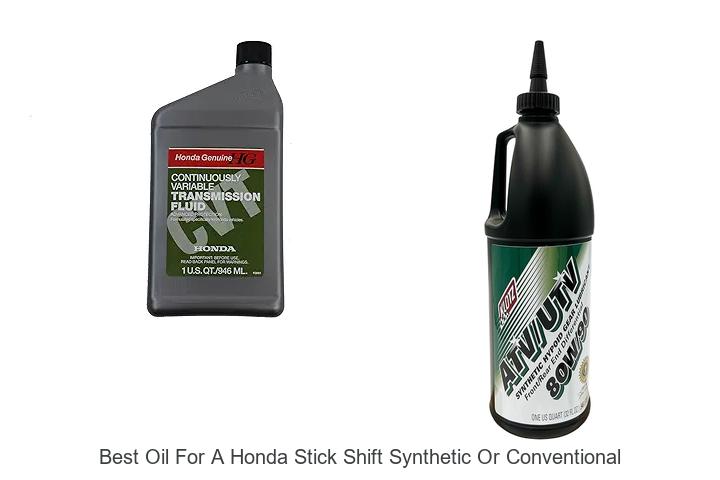
Our Recommended 1  | Genuine Honda Fluid 08200-9006 CVT-1 Continuously Variable Transmission Fluid – | Check Price |
Our Recommended 2  | Klotz ATV UTV SXS 80W-90 Front & Rear End Differential | Check Price |
1. Genuine Honda Fluid 08200-9006 CVT-1 Continuously Variable Transmission Fluid –
Maintaining your Honda’s transmission with the right fluid boosts performance and extends its life. Genuine Honda Fluid 08200-9006 CVT-1 is tailored specifically for Honda CV transmissions, delivering reliable lubrication and protection.
Crafted using advanced base oils and additives, this transmission fluid offers improved oxidation resistance. Its formulation reduces deposits and allows for longer intervals between fluid changes.
This Genuine Honda Fluid 08200-9006 CVT-1 is designed to fit all Honda models equipped with continuously variable transmissions (CVT). Precision-formulated to meet Honda’s stringent requirements, it offers superior protection against wear and corrosion.
The liquid consistency and high-quality additives deliver consistent performance across a wide temperature range.
Installation and maintenance become easier thanks to its compatibility and recommended usage for transmission lubrication. This fluid is a great choice for owners seeking a trusted product that meets factory standards.
Instead of generic oils, using a dedicated Honda fluid helps maintain optimal operation and vehicle longevity.
It also features a limited warranty backed by Honda, providing peace of mind with every use. With its proven track record, this fluid holds a solid position among transmission fluid options on the market. Drivers looking to ensure smooth shifts and proper transmission care will find this product well suited to their needs.
Pros
- Specifically formulated for Honda CV transmissions
- Advanced additives improve oxidation resistance and reduce deposits
- Performs well at low temperatures for easy starting
Cons
- Only suitable for CVT models; not compatible with conventional transmissions
Genuine Honda Fluid 08200-9006 CVT-1 delivers targeted performance for Honda CV transmissions. It balances quality, compatibility, and reliability, making it a dependable choice for proper transmission care.
For those seeking fluid designed specifically for Honda’s CVT systems, this product stands out.
2. Klotz ATV UTV SXS 80W-90 Front & Rear End Differential
Maintaining your Honda stick shift requires reliable and durable differential lubrication. Klotz ATV UTV SXS 80W-90 Front & Rear End Differential oil is crafted to protect crucial transmission components under heavy-duty and off-road conditions.
This lubricant is specifically formulated for front and rear differentials in ATVs, UTVs, and side-by-sides. It meets the demands of extreme shock loads and prevents corrosion, ensuring dependable operation in challenging environments.
The Klotz 80W-90 Differential Lubricant features a robust additive package that delivers excellent oxidative stability and wear resistance. Designed as a synthetic blend, it offers superior foam suppression and corrosion protection compared to conventional oils. This ensures optimal gear performance even in harsh conditions.
This ensures optimal gear performance even in harsh conditions.
Its high viscosity rating makes it ideal for heavy-duty use, providing consistent protection against extreme pressures and shocks. The lubricant suits various brands, including Honda, Arctic Cat, Polaris, and Yamaha, making it versatile for multiple vehicle types.
Application is straightforward, ensuring easy maintenance and continued performance. Klotz’s commitment to premium ingredients means no compromises in quality or reliability. Suitable for recreational and demanding off-road activities, this oil helps keep differentials operating smoothly and quietly for longer intervals.
Suitable for recreational and demanding off-road activities, this oil helps keep differentials operating smoothly and quietly for longer intervals.
Pros
- Excellent protection against wear and corrosion
- Superior foam suppression for stable lubrication
- Synthetic formulation tailored for heavy-duty off-road use
Cons
- Limited to differential applications, not suitable for engine oil use
Klotz 80W-90 Differential Lubricant stands out for its balance of protection and durability in off-road scenarios. Its design supports Honda stick shift models especially well, offering a synthetic alternative that outperforms many conventional differentials oils.
Best Oil for Honda Stick Shift: Synthetic vs Conventional
Compatibility with honda stick shift transmissions
Choosing the right oil for a Honda stick shift involves paying attention to manufacturer recommendations and specifications, which provide guidance on the appropriate type and grade of oil for maintaining the transmission’s health. The viscosity grades suitable for Honda manual transmissions typically fall within specific ranges, balancing protection and smooth operation under various temperatures and driving conditions. Selecting between synthetic and conventional oils can influence clutch and gear performance, as synthetic oils often offer enhanced thermal stability and wear protection, which can lead to more consistent shifting and extended component life.
Considering these factors can lead to improved performance, better protection against wear, and overall longevity of the transmission system.
Environmental and performance considerations
Selecting the best oil for a Honda stick shift synthetic or conventional depends on understanding the balance between environmental benefits and performance needs. Synthetic oils typically promote better fuel efficiency due to their enhanced lubricating properties, which reduce engine friction and wear. This can lead to a noticeable improvement in mileage and a lower carbon footprint.
This can lead to a noticeable improvement in mileage and a lower carbon footprint. Conventional oils, while often more affordable, may not provide the same level of fuel economy or long-term engine protection. Additionally, some synthetic oils include additives designed to clean engine components, prevent corrosion, and improve performance under a variety of driving conditions.
When choosing an oil, consider the specific demands of your driving style and local climate, as well as the manufacturer’s recommendations. Environmental benefits are further accentuated when using oils formulated with biodegradable or lower-toxicity additives, helping to reduce pollution from oil changes.
Balancing these factors helps in maintaining the health of your Honda’s engine while supporting sustainability and efficient driving.
Longevity and maintenance implications
Choosing the best oil for a Honda stick shift involves understanding the differences between synthetic and conventional options and how they affect your vehicle’s performance. Synthetic oil generally offers better protection against heat and wear, which can be particularly beneficial for manual transmissions that may experience more frequent shifting or stress.
Conventional oil is often more affordable and suitable for drivers with less demanding driving habits. Oil change intervals typically vary, with synthetic oils allowing longer periods between changes, sometimes up to 7,500 to 10,000 miles, while conventional oils might require changes closer to every 3,000 to 5,000 miles. Regular oil changes help reduce transmission wear and tear by maintaining lubrication and preventing buildup that can impair shifting quality.
Signs that it’s time to change your oil include unusual noises during gear shifts, difficulty changing gears, or a noticeable decrease in transmission smoothness. By paying attention to these factors and following the recommended maintenance schedule in your Honda’s manual, you can help ensure your manual transmission remains reliable and performs well over time.
Key factors to consider before purchasing
Choosing the right oil for a Honda stick shift involves understanding how different oils perform under various driving conditions and how frequently you drive. For drivers who cover shorter distances or spend more time idling in traffic, an oil that provides consistent protection during stop-and-go situations may be beneficial.
Climate plays a significant role as well; in colder regions, an oil with good low-temperature flow helps with easier starts, while warmer climates require oils that resist breaking down under heat. When comparing synthetic and conventional oils, cost is another point to weigh.
Synthetic oils typically come at a higher price but offer extended change intervals and better protection, which can save money over time. Conventional oils may be more budget-friendly initially but often need more frequent changes. Balancing these elements—driving habits, environmental factors, and budget—can guide you toward the best choice for maintaining your Honda’s performance and longevity.
Understanding oil types: synthetic vs conventional
When choosing the best oil for a Honda stick shift, understanding the differences between synthetic and conventional oils can help make the right decision for your vehicle’s needs. Synthetic oil is produced using a more refined manufacturing process, resulting in a uniform molecular structure that enhances engine protection and performance.
It tends to offer superior resistance to breakdown and maintains viscosity better under extreme temperatures, making it ideal for those who drive in harsh conditions or require added engine longevity. Conventional oil, on the other hand, is derived from crude oil with fewer refining steps, which makes it more affordable but also less consistent in quality. This type of oil works well for everyday driving and standard engine requirements, though it may need to be changed more frequently.
For a Honda with a manual transmission, synthetic oils can provide smoother shifts and better protection against wear, especially in stop-and-go city driving or spirited driving situations. However, if your driving is mostly gentle and mileage is moderate, conventional oil might serve your needs adequately.
Paying attention to oil certifications and change intervals can also help maintain engine health and performance over time.
Brand reputation and user reviews
When choosing the best oil for a Honda stick shift, both synthetic and conventional options offer specific advantages depending on driving style and climate. Trusted brands known for producing high-quality oils tailored for Honda vehicles often provide detailed information about their formulations, which can help in making an informed decision.
Customer feedback tends to highlight the improved engine smoothness and gear shifting performance when using synthetic oils, while conventional oils receive praise for affordability and meeting basic lubrication needs. Warranty and support considerations play a role as well; ensuring the chosen oil meets Honda’s specifications can help maintain warranty coverage and provide peace of mind with manufacturer-backed support. Balancing these factors based on your budget, vehicle age, and driving habits will guide the selection of an oil that keeps your Honda’s transmission running smoothly over time.
People Also Asked
What Type Of Oil Is Recommended For A Honda Stick Shift: Synthetic Or Conventional?
For a Honda stick shift, synthetic oil is generally recommended because it provides better protection, improved performance, and longer intervals between oil changes. However, always check the owner’s manual for the specific oil type and viscosity recommended for your model.
How Does Synthetic Oil Benefit A Honda Manual Transmission Compared To Conventional Oil?
Synthetic oil benefits a Honda manual transmission by providing superior lubrication and thermal stability, which reduces wear and extends the transmission’s lifespan. Compared to conventional oil, it also offers better resistance to breakdown under high temperatures and heavy loads, ensuring smoother shifting and improved performance.
Can Using Synthetic Oil Improve The Performance Of A Honda Stick Shift?
Using synthetic oil can improve the performance of a Honda stick shift by providing better lubrication, reducing engine friction, and enhancing gear shifting smoothness. This can lead to improved fuel efficiency and prolong the life of the transmission.
How Often Should You Change Synthetic Oil Versus Conventional Oil In A Honda Stick Shift?
For a Honda with a stick shift, synthetic oil should typically be changed every 7,500 to 10,000 miles, while conventional oil usually requires changing every 3,000 to 5,000 miles. Always refer to your owner’s manual for the manufacturer’s specific recommendations.
Are There Any Risks Associated With Using Conventional Oil In A Honda Manual Transmission?
Yes, using conventional oil in a Honda manual transmission can pose risks such as inadequate lubrication and increased wear, as it may not meet the specific viscosity and additive requirements designed for Honda transmissions. It’s generally recommended to use the manufacturer-specified transmission fluid to ensure optimal performance and longevity.
Conclusion
Choosing between synthetic and conventional oil for a Honda stick shift depends on your driving habits and vehicle needs. Synthetic oil offers superior protection against wear, better performance in extreme temperatures, and longer oil change intervals, making it ideal for drivers who prioritize engine longevity and smoother shifts.
Conventional oil, while more affordable, requires more frequent changes and may not provide the same level of protection under demanding conditions. The best oil for a Honda stick shift synthetic or conventional ultimately balances cost with performance requirements. If you want reliable, consistent operation and are willing to invest a bit more, synthetic is a strong choice.
For those on a budget with moderate driving, conventional oil remains a practical option. Assessing your specific usage will help make the right decision.